In this article
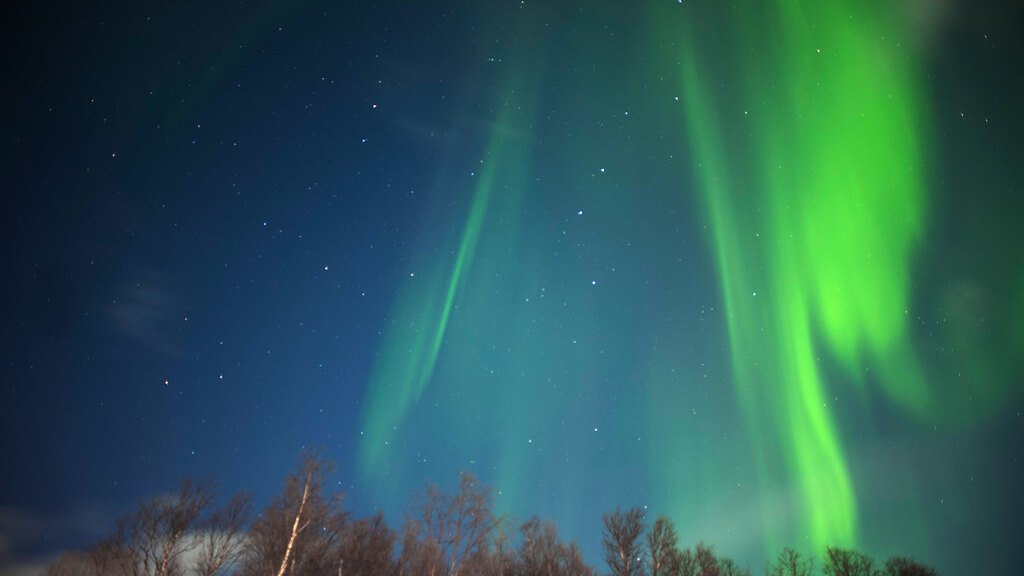
Solar storm effects on Earth depend on the storm’s strength. Most storms do nothing worse than paint the sky with auroras. A severe storm can trip parts of the power grid, make GPS less accurate for days, black out long-range radio and drag low satellites out of orbit. It does not harm people on the ground directly. Here is what each level does, using the official US space weather scales.
Key facts
- 6 million people in Canada lost power for 9 hours in the March 1989 geomagnetic storm.
- 38 Starlink satellites re-entered the atmosphere after a storm in February 2022 increased drag on them.
- G5 (extreme) storms happen about 4 times in an 11-year solar cycle; May 2024 brought the first since 2003.
- No direct harm to people on the ground; radiation risk applies to astronauts and high-latitude flights.
Solar storm effects on Earth, level by level
The US National Oceanic and Atmospheric Administration (NOAA) rates geomagnetic storms from G1 to G5. A geomagnetic storm happens when a burst of charged particles from the Sun, usually a coronal mass ejection (CME), shakes Earth’s magnetic field. This table condenses NOAA’s official scale.
| Level | Power grids | Satellites | GPS and radio | Aurora seen as far south as | How often |
|---|---|---|---|---|---|
| G1 Minor | Weak fluctuations | Minor effects | Little effect | Northern Michigan and Maine | 1,700 per cycle |
| G2 Moderate | Voltage alarms in the far north | Drag changes orbit predictions | High-latitude radio fades | New York and Idaho | 600 per cycle |
| G3 Strong | Voltage corrections, false alarms | Surface charging, more drag | Intermittent GPS problems | Illinois and Oregon | 200 per cycle |
| G4 Severe | Widespread voltage problems, some equipment trips | Charging and tracking problems | GPS degraded for hours | Alabama and northern California | 100 per cycle |
| G5 Extreme | Possible blackouts and transformer damage | Extensive charging, tracking problems | GPS degraded for days; radio out for 1 to 2 days | Florida and southern Texas | 4 per cycle |
The danger to power grids comes from geomagnetically induced currents: the shaking magnetic field drives extra electric current through long conductors such as high-voltage power lines and pipelines, which can overheat transformers. NOAA’s geomagnetic storm page explains that the same storms bend radio signals in the upper atmosphere, creating GPS position errors.
What solar storms have actually broken
| Date | Storm | What happened |
|---|---|---|
| 13 March 1989 | Geomagnetic storm | Hydro-Québec’s grid collapsed: 6 million people without power for 9 hours; transformers in New Jersey damaged |
| October 2003 | G5 | The last extreme storm before 2024 |
| February 2022 | Geomagnetic storm | Drag rose up to 50% at low altitude; 38 newly launched Starlink satellites re-entered |
| 10 May 2024 | G5 | Strongest storm in two decades; auroras seen as far as 26° magnetic latitude; grid and satellite operators warned in advance |
The National Weather Service cites the North American Electric Reliability Corporation for the New Jersey transformer damage in 1989. SpaceX said its February 2022 satellites were hit a day after launch, when a storm warmed the upper atmosphere and raised drag up to 50% above earlier launches. NOAA’s page on satellite drag explains why low orbits are most exposed.
The May 2024 storm shows the system working. According to NASA, NOAA’s Space Weather Prediction Center notified power grid and commercial satellite operators ahead of the storm so they could reduce the impact.
Solar storm effects on humans
On the ground, Earth’s atmosphere and magnetic field shield you. NOAA’s separate solar radiation storm scale says the most extreme events pose a radiation hazard to astronauts on spacewalks, and possible radiation risk to passengers and crew in high-flying aircraft at high latitudes.
NOAA’s scales list no effects on household electronics such as phones and laptops. The indirect risks are a power cut, patchy GPS and, in an extreme case, disruption to services that rely on satellites.
A simple preparedness checklist
- Treat an extreme storm warning like a storm warning: charge phones and power banks.
- Keep a paper map or offline maps in case GPS is unreliable.
- If you rely on powered medical equipment, have the same backup plan you would for any outage.
- Check the NOAA Space Weather Prediction Center for current alerts; like weather forecasts, they improve as an event gets closer.
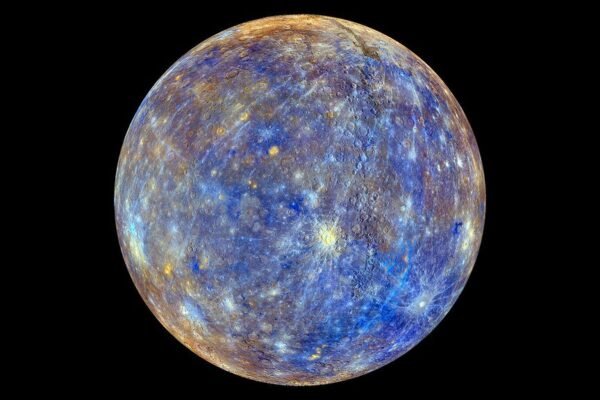
The Sun drives far more than storms; see why Mercury, the planet closest to the Sun, still has ice.
Frequently asked questions
Are solar storms dangerous to humans?
Not on the ground. Extreme radiation storms are a hazard to astronauts and can expose people on high-latitude flights to more radiation.
Can a solar storm knock out power?
Yes, in severe cases. The March 1989 storm left 6 million people in Canada without power for 9 hours.
What does a solar storm do to satellites?
It can charge their surfaces, confuse their orientation and, by heating the upper atmosphere, increase drag that pulls low satellites down.
Can a solar storm affect electronics?
Not household electronics directly. The risks are to long power lines, pipelines, satellites, GPS and high-frequency radio.
Read more in our Astronomy section.
Sources
- NOAA Space Weather Prediction Center: NOAA space weather scales
- NOAA SWPC: Geomagnetic storms
- NOAA SWPC: Space weather and GPS systems
- NOAA SWPC: Satellite drag
- US National Weather Service: Space weather
- SpaceX: Updates (Geomagnetic storm and recently deployed Starlink satellites)
- NASA: How NASA tracked the most intense solar storm in decades