
In this article
Updated 29 October 2026. This is a developing story; we will update it as new official information is published.
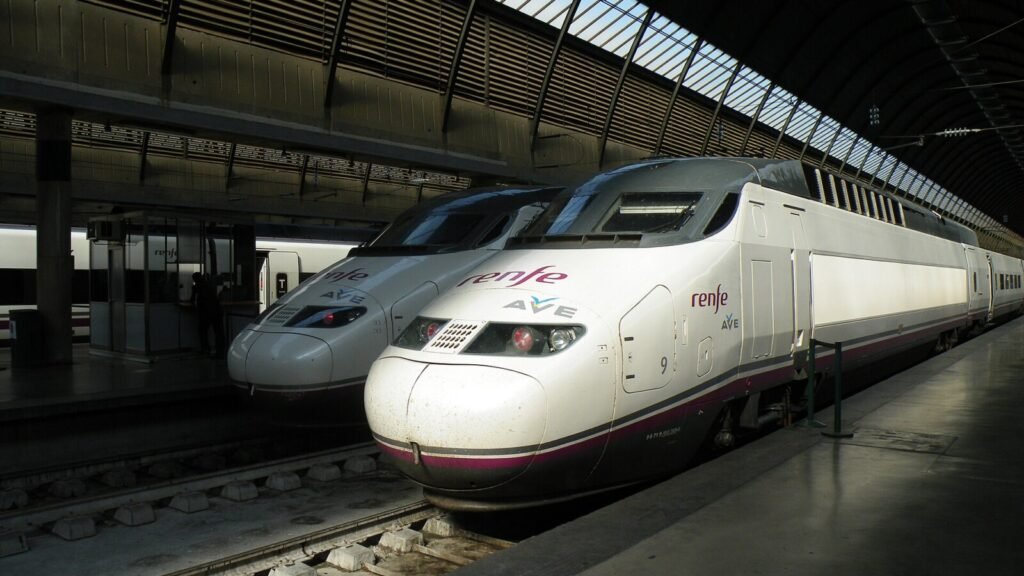
The Spain train crash on Wednesday 28 October killed at least 69 people when a state-run Renfe high-speed train ran into the back of a stationary train run by private operator Iryo near the town of Urda, about 130 km south of Madrid, according to the Guardian and the BBC. Both trains were heading from Madrid towards Andalusia. Spain’s transport minister has called the decision to let traffic resume after a signalling failure “inexplicable.”
Key facts
- 69 dead and more than 100 people treated in hospital, 15 in a serious condition on Wednesday.
- About 544 passengers: 397 on the Renfe train and 146 plus a baby on the Iryo train.
- Cause under investigation: a signalling computer failure halted trains, then the control centre told them to continue.
- Second deadly crash this year on the same Madrid to Andalusia line, after 46 died near Adamuz in January.
What happened
Spain’s transport minister, Óscar Puente, said the LZB signalling system, which automatically stops a train if the line ahead is occupied, failed at about 8:30 a.m. because of a computer malfunction. About six trains were halted along a 63 km stretch. The control centre in Madrid, run by infrastructure manager Adif, then took over and instructed trains to continue.
Audio recordings published by Spanish media, and reported by the BBC, appear to show the Renfe driver being told to proceed “at normal speed”, while the Iryo train ahead had reported that it could not move. Under normal rules, a driver in that situation would be expected to travel at no more than 40 km/h on sight, the BBC reported. The Renfe train struck the Iryo train at about 8:53 a.m., and several carriages fell down an embankment.
“It was the control centre, through its operators, that made the decision to resume traffic, under circumstances that, from our point of view, are inexplicable,” Puente said, according to the Guardian. “Clearly, it was a wrong decision.”
Timeline
| Time (local, 28 October) | Event |
|---|---|
| About 8:30 a.m. | LZB signalling fails; around six trains stop on a 63 km stretch |
| About 8:36 a.m. | Control centre clears the Renfe train to move, recordings suggest |
| 8:53 a.m. | Renfe train hits the stationary Iryo train between Mora and Orgaz, near Urda |
| Wednesday to Thursday | Rescuers search wreckage overnight; death toll rises to 69 |
| Thursday 29 October | Three days of national mourning begin |
The victims and the response
By Thursday, 50 of the 110 people taken to hospitals in Castilla-La Mancha were still being treated, the regional leader said. The Guardia Civil set up offices in Madrid, Toledo, Córdoba and Seville to collect DNA samples from relatives, and 64 people had been reported missing by families by Thursday morning. Prime Minister Pedro Sánchez visited the area and promised to “get to the bottom of every last detail.” Most parties suspended campaigning for the snap general election due on 29 November.
Why it matters
Spain has the largest high-speed network in Europe, about 4,000 km, and train travel grew 40% from 2019 to 2024 as private operators entered the market, the Guardian reported. This is the second fatal collision on the Madrid to Andalusia line in ten months, and Europe’s deadliest train accident since a 2013 derailment in Santiago de Compostela killed 80 people. Train drivers went ahead with a planned strike over safety. For the physics of why sudden stops are so deadly, see our explainer on how crash forces work.
What comes next
Spain’s rail accident investigators will examine the signalling failure, the control centre’s decisions and the trains’ own systems. Officials have not given a date for findings. We will update this article as official information is published; see our latest news for other developing stories.
Frequently asked questions
Where was the Spain train crash?
Near the town of Urda in Toledo province, Castilla-La Mancha, between Mora and Orgaz, about 130 km south of Madrid on the high-speed line to Andalusia.
How many people died in the Spain train crash?
At least 69 people, according to Spanish officials cited by the BBC and the Guardian on 29 October.
What caused the Spain train crash?
It is under investigation. The transport minister said a signalling failure halted trains and the control centre then wrongly let traffic resume.
Was there another Spain train crash in 2026?
Yes. In January 2026, a collision near Adamuz in Andalusia on the same line killed 46 people.
Read more in our World section.
Sources
- BBC: What we know so far about deadly Spain train crash
- BBC: Audio reveals exchanges between control centre and drivers before deadly Spain train crash
- The Guardian: Spain begins mourning period after train crash, 29 October 2026
- The Guardian: Second fatal train collision this year casts doubt over Spain’s high-speed rail network


