In this article
End-to-end encryption means a message is scrambled on your device and can only be unscrambled on the device of the person you send it to. Nobody in between can read it: not your internet provider, not a hacker on the café Wi-Fi, and not the company that runs the app. That is a powerful protection. But it covers less than many people think.
This guide explains, in plain English, what end-to-end encryption protects, the five things it cannot protect, and the settings that close the biggest gaps.
Key facts
- It protects content in transit and on the company’s servers: only the devices at each end hold the keys.
- It does not hide metadata: who you contacted, when, and how often can still be recorded.
- Backups can be the weak point: on Apple’s standard setting, iCloud Backup is not end-to-end encrypted.
- An unlocked phone defeats it: anyone holding your open device can read your messages.
How end-to-end encryption works
Each person’s device creates a pair of digital keys. One key is public and can be shared. The other is private and never leaves the device. When you send a message, your app locks it with the recipient’s public key. Only their private key can unlock it.
Compare that with ordinary encryption, often called encryption in transit. Your message is protected on its way to the company’s server, but the company holds the keys and can read it there. End-to-end encryption removes the company from the list of people who can read your messages.
| Type | Who can read your content | Common examples |
|---|---|---|
| No encryption | Anyone who intercepts it | Old SMS text messages |
| Encryption in transit | You, the recipient and the service provider | Most email, many cloud services |
| End-to-end encryption | Only you and the recipient | Signal, WhatsApp chats, iMessage |
What end-to-end encryption can’t protect
1. Metadata: who, when and how often
Encryption hides what you say, not the fact that you said it. The Electronic Frontier Foundation’s guide to metadata gives a stark example: a phone company may not hear your calls, but it can know that “you called a gynecologist, spoke for a half hour, and then called the local abortion clinic’s number later that day.”
Apps differ a lot here. Signal publishes the legal requests it has received and says the only information it can produce is the date and time an account registered and the last date it connected to Signal. Other services may keep far more, such as contact lists, IP addresses or group memberships.
2. An unlocked or compromised phone
Your messages are decrypted on your screen so you can read them. Anyone who picks up your unlocked phone, or malware running on it, sees them too. Encryption protects messages travelling across the internet, not the device at either end. A strong passcode, automatic screen lock and up-to-date software matter as much as the app you choose.
3. Cloud backups
This is the gap most people miss. Apple’s own iCloud security overview shows that with standard data protection, iCloud Backup is encrypted but Apple holds the keys. Apple adds that if you use iCloud Backup together with Messages in iCloud, “your backup includes a copy of the Messages in iCloud encryption key”. In practice, your end-to-end encrypted chats can end up in a backup that is not end-to-end encrypted.
| iCloud data | Standard protection | With Advanced Data Protection |
|---|---|---|
| iCloud Backup | Encrypted, Apple holds keys | End-to-end encrypted |
| iCloud Drive and Photos | Encrypted, Apple holds keys | End-to-end encrypted |
| Notes | Encrypted, Apple holds keys | End-to-end encrypted |
| Messages in iCloud | End-to-end encrypted | End-to-end encrypted |
| Passwords and Health data | End-to-end encrypted | End-to-end encrypted |
| iCloud Mail, Contacts, Calendars | Encrypted, Apple holds keys | Encrypted, Apple holds keys |
Apple’s optional Advanced Data Protection closes most of this gap. The trade-off is real: if you lose access to your account, Apple says it cannot help you recover the data, so you must set up a recovery contact or recovery key first.
4. The other person
Once your message arrives, the recipient can screenshot it, forward it, or show it to someone else. Encryption cannot stop people you trust from sharing what you send. Disappearing messages reduce the risk but cannot prevent a photo of the screen.
5. Email and some everyday services
Ordinary email is rarely end-to-end encrypted, because it has to work between different providers. Apple says iCloud Mail does not use end-to-end encryption “because of the need to interoperate with the global email system”. The same is true of most Gmail and Outlook messages. Treat email as a postcard that the providers along the way could read.
A five-minute privacy checklist
- Use a messaging app with end-to-end encryption turned on by default for all chats.
- Set a six-digit or longer passcode and a short auto-lock time on your phone.
- Check where your chats are backed up, and turn on end-to-end encrypted backups if your app or phone offers them.
- Protect your accounts with two-factor authentication, so a stolen password alone cannot open your backups.
- Keep your phone and apps updated; we explain why in the case for software updates.
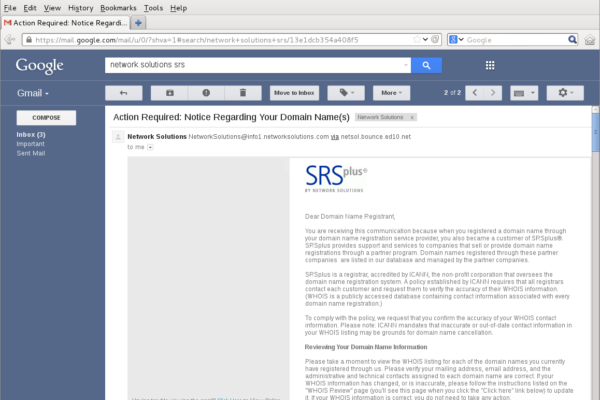
Remember that the most common attacks do not break encryption at all. They trick you into handing over a code or password. Our guide to spotting a phishing email shows the warning signs.
Frequently asked questions
What does end-to-end encryption mean?
It means only the sender and recipient can read a message. It is encrypted on the sender’s device and only decrypted on the recipient’s device, so the service provider in the middle cannot read it.
Can police read end-to-end encrypted messages?
Not by asking the app provider for message content, because the provider does not hold the keys. They may still obtain metadata from the provider, unencrypted backups, or the phone itself if they can unlock it.
What data can Signal hand over?
Signal says the only information it can produce in response to a legal request is the date and time an account registered and the last date it connected to the service.
Can end-to-end encryption be hacked?
Well-designed encryption is very hard to break directly. Attackers usually go around it, by stealing an unlocked phone, installing spyware, or tricking you into sharing a login code.
Is iCloud end-to-end encrypted?
Partly. Some data, such as passwords and Health data, is always end-to-end encrypted. Backups, Photos and iCloud Drive are only end-to-end encrypted if you turn on Advanced Data Protection.
Please note: This guide explains general privacy principles and is not legal or security advice for any specific situation.
Browse more guides in our Cybersecurity section.