In this article
Updated 13 October 2026. This is a developing story; we will update it as new official information is published.
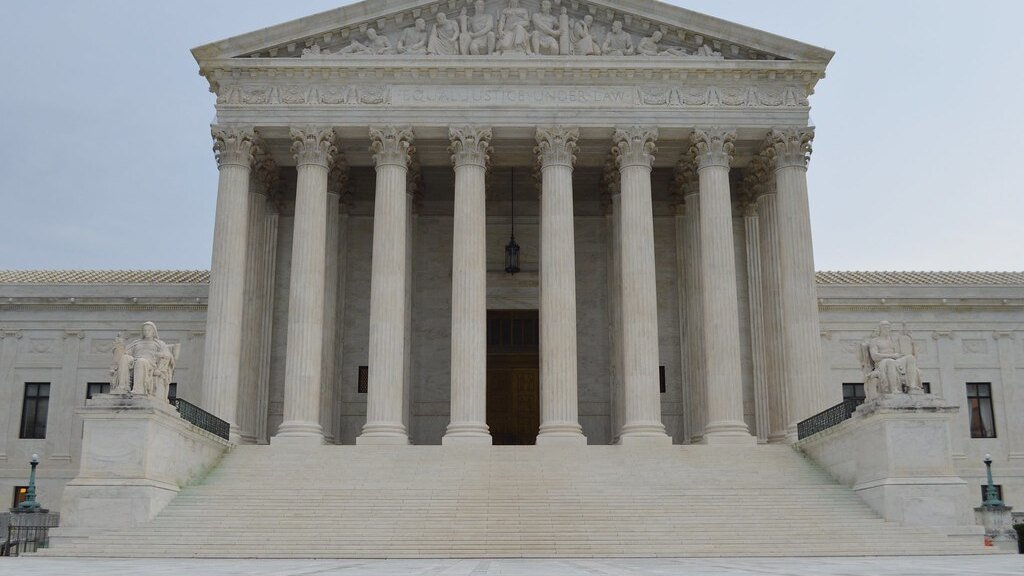
In the Supreme Court DOGE case, the justices will decide how far courts can go in forcing the US DOGE Service to hand over internal information. On 13 October 2026 the Court agreed to hear the government’s appeal in a lawsuit brought by the watchdog group Citizens for Responsibility and Ethics in Washington (CREW).
Not legal advice: This article explains a court case for general readers.
Key facts
- Case: U.S. DOGE Service v. United States District Court for the District of Columbia, No. 25-1103.
- Order: the Court granted the government’s petition on 13 October 2026.
- The core fight: whether DOGE counts as an “agency” that must answer public records requests, and how much a court can demand to find out.
- Earlier round: the Supreme Court already sent the case back once, telling the appeals court to narrow the discovery.
What happened
The Court’s 13 October order list shows it granted certiorari, meaning it agreed to hear the case, in No. 25-1103. The government, represented by Solicitor General D. John Sauer, filed its petition in March 2026, according to the Court’s docket.
What the case is about
CREW sued to get DOGE records under the Freedom of Information Act (FOIA), the law that lets the public request federal agency records. But FOIA only covers agencies. Bodies that simply advise the president are not covered.
DOGE, the US DOGE Service, sits inside the Executive Office of the President. The government says it only advises the president. CREW argues DOGE has acted with real power, which would make it an agency subject to FOIA.
To settle that question, a federal district court allowed CREW to gather evidence, called discovery, including internal communications and a deposition of DOGE’s head. The government says that goes too far.
What the justices will decide
According to the questions presented, the Court will consider two issues:
- Whether the appeals court ignored the Supreme Court’s earlier instruction to narrow discovery, and the separation-of-powers principles set out in Cheney v. U.S. District Court (2004), a case about protecting the president’s advisers from intrusive demands.
- Whether a court can order broad discovery against a White House advisory body just to decide whether FOIA applies to it in the first place.
| Date | Step |
|---|---|
| 2025 | CREW’s FOIA lawsuit; district court allows discovery |
| 2025 | Supreme Court sends the case back, asking the appeals court to narrow discovery |
| 14 July 2025 | D.C. Circuit decision under review |
| 18 Dec 2025 | Rehearing denied |
| 18 Mar 2026 | Government files Supreme Court petition |
| 13 Oct 2026 | Supreme Court agrees to hear the case |
Why it matters
- Transparency: the ruling could decide how much the public can learn about powerful bodies inside the White House.
- Presidential power: it will test how far courts can question the president’s advisers, a long-running separation-of-powers issue.
- Future cases: the answer will guide how judges handle FOIA suits against other White House offices.
What comes next
The parties will file written briefs, and the Court will schedule oral argument. Cases granted in October are usually argued and decided within the same term, which normally ends by early July. The decision is therefore likely by mid-2027.
For background on how laws and courts work, read our guides to how a bill becomes law and why most bills never become law.
Frequently asked questions
What is the Supreme Court DOGE case about?
Whether courts can order broad discovery against the US DOGE Service to decide if it is an agency covered by public records law.
Who brought the DOGE lawsuit?
Citizens for Responsibility and Ethics in Washington (CREW), a watchdog group, sued under the Freedom of Information Act.
When will the Supreme Court rule on DOGE?
The Court agreed to hear the case on 13 October 2026. A decision is likely by the end of the term, usually around June or early July 2027.
Is DOGE a federal agency?
That is the underlying dispute. The government says DOGE only advises the president; CREW says it has acted with real authority.
Browse more in our Law section.