In this article
Every electricity bill uses words from physics: power, energy, watts, kilowatt-hours. Most people pay the bill without knowing what they mean. Once you understand three simple ideas, you can work out exactly what any appliance costs to run, and where your money really goes.
Key facts
- Energy is the ability to do something: heat water, move a car, light a room. It is measured in joules.
- Power is how fast energy is used. It is measured in watts. One watt means one joule every second.
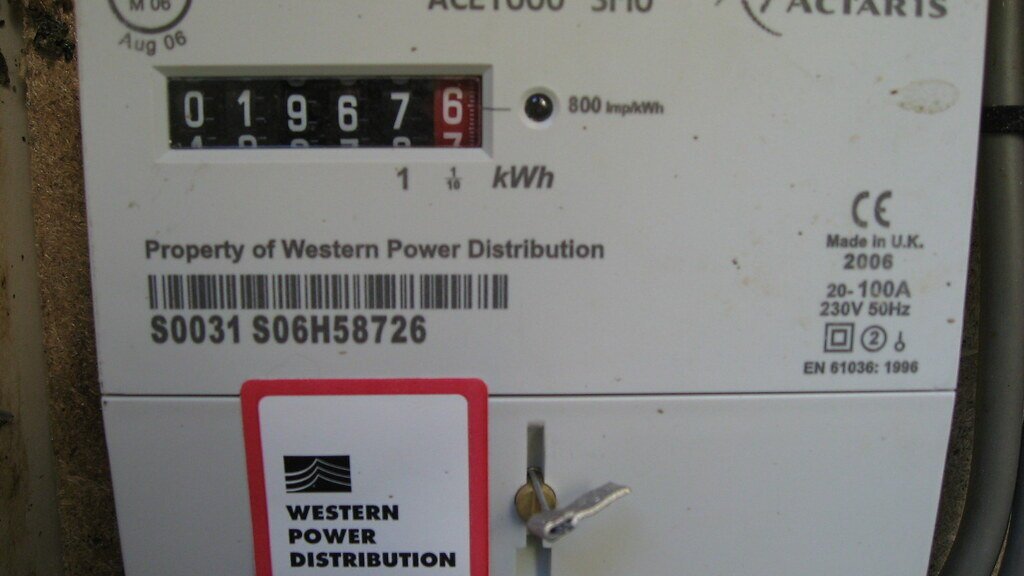
- A kilowatt-hour (kWh) is the unit on your bill: using 1,000 watts for one hour. It equals 3.6 million joules.
- 18.2 US cents: the average price of 1 kWh for American homes in 2026, according to the US Energy Information Administration.
Work: using energy to move something
In physics, “work” has a narrow meaning: you do work when you push or pull something and it moves. The amount of work is the force multiplied by the distance.
Lift a 1-kilogram bag of sugar one metre onto a shelf and you do about 10 joules of work. That is tiny. A single joule is roughly the energy needed to lift a small apple one metre.
Energy: what work uses up
Energy is what makes work possible. It comes in many forms, such as heat, movement, light and electricity, and it can change from one form to another. A kettle turns electrical energy into heat. A fan turns it into movement. The joule is the official unit of energy in the International System of Units.
Power: how fast energy is used
Power tells you the speed. A 2,000-watt kettle uses 2,000 joules every second. A 10-watt LED bulb uses 10 joules every second. Both can use the same total energy; the kettle just uses it 200 times faster.
That is why the watt number on an appliance tells you how hard it works while it is on, but not your bill. Your bill depends on power and time.
From watts to your bill: one simple formula
Cost = (watts ÷ 1,000) × hours used × price per kWh
Example: a 2,000-watt kettle that runs for 6 minutes (0.1 hours) a day uses 2 × 0.1 = 0.2 kWh a day. At 18.2 cents per kWh, that is about 3.6 cents a day, or roughly $13 a year.
What common appliances really cost
The table uses typical power ratings and the 2026 US average price of 18.2 cents per kWh from the Energy Information Administration. Your own appliances and tariff will differ, so check the label and your bill. The Energy Information Administration also explains how American homes use electricity.
| Appliance | Typical power | Daily use | kWh per day | Cost per year |
|---|---|---|---|---|
| LED bulb | 10 W | 5 hours | 0.05 | about $3 |
| Wi-Fi router | 10 W | 24 hours | 0.24 | about $16 |
| Laptop | 50 W | 6 hours | 0.30 | about $20 |
| Kettle | 2,000 W | 6 minutes | 0.20 | about $13 |
| Television | 100 W | 4 hours | 0.40 | about $27 |
| Fridge | Cycles on and off | 24 hours | about 1.0 | about $66 |
| Air conditioner (window unit) | 1,000 W | 8 hours | 8.0 | about $530 if used all year |
| Electric space heater | 1,500 W | 4 hours | 6.0 | about $400 if used all year |
What the table teaches
- Heating and cooling dominate. Anything that makes heat or cold uses far more energy than electronics.
- Always-on devices add up. A small device running 24 hours a day can cost more than a big one used for minutes.
- High watts are not always expensive. The kettle is powerful but runs briefly, so it costs less than the TV.
Three quick checks for your home
- Find the watt rating on the label or in the manual of your three most-used appliances.
- Estimate their daily hours and use the formula above.
- Compare the result with your bill. Big gaps usually point to heating, cooling or an old fridge.
Frequently asked questions
What is the difference between kW and kWh?
A kilowatt (kW) is power: how fast energy is used right now. A kilowatt-hour (kWh) is energy: how much was used over time. Your bill charges for kWh.
Do appliances use power when switched off?
Many do, in standby mode. Each device usually draws a watt or two, which can add up to a few dollars a year per device.
Why is 1 kWh equal to 3.6 million joules?
One kilowatt is 1,000 joules per second, and one hour has 3,600 seconds. 1,000 × 3,600 = 3,600,000 joules.
For more everyday science, see how weather forecasts are made, or browse the Physics section.