In this article
Weather forecasts have improved so steadily that most people barely notice. Forecast accuracy has improved by roughly one day per decade: a modern five-day forecast is about as reliable as a one-day forecast was in 1980. That progress is one of the quiet triumphs of modern science.
Key facts
- About 800 weather stations worldwide launch balloons carrying instruments, most of them twice a day.
- One day per decade: the rate at which forecast skill has improved.
- February 2025: the European Centre for Medium-Range Weather Forecasts (ECMWF) began running an AI forecasting model operationally.
- A 60% chance of rain means that in similar conditions it rains on about six days out of ten.
Step 1: Measuring the atmosphere
Every forecast starts with a snapshot of the atmosphere as it is now. Measurements come from ground stations, ships, buoys, aircraft, radar and satellites. Some of the most valuable data still come from weather balloons.
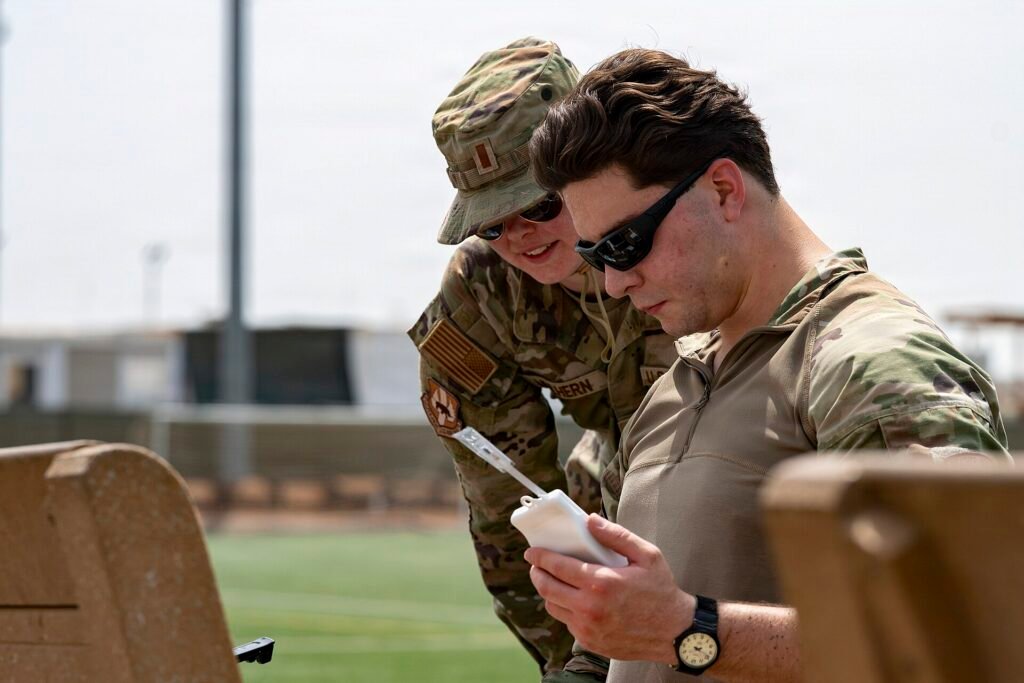
About 800 stations around the world release balloons carrying small instrument packages called radiosondes, typically at midnight and midday Greenwich time. As they rise, they measure temperature, humidity, pressure and wind up into the stratosphere. The data are shared freely between countries through the World Meteorological Organization.
Step 2: Running the models
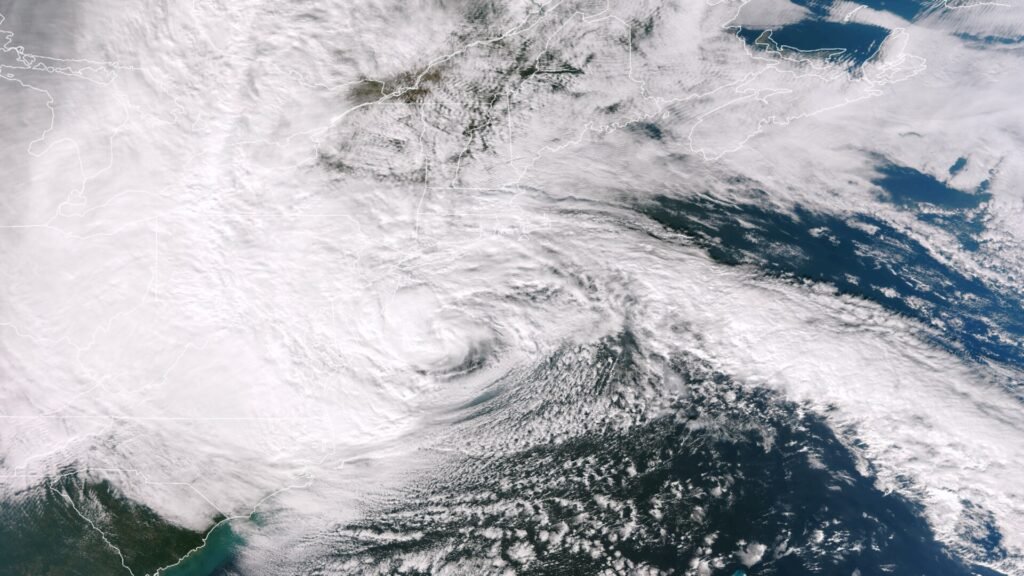
Supercomputers turn the snapshot into a forecast using the laws of physics. The atmosphere is divided into millions of three-dimensional boxes, and equations calculate how air, heat and moisture move between them, minute by minute, days into the future.
Step 3: Dealing with chaos
The atmosphere is a chaotic system: tiny errors in the starting data grow over time. That is why forecasts become less reliable further ahead. To handle this, forecasters run the model many times with slightly different starting conditions. This set of runs is called an ensemble. If most runs agree, confidence is high; if they spread out, the forecast is uncertain.
Step 4: Artificial intelligence joins in
Since 2023, AI models trained on decades of past weather have produced forecasts that rival traditional ones for many measures. In February 2025 the ECMWF put its Artificial Intelligence Forecasting System (AIFS) into operation alongside its physics-based model. ECMWF reports that it beats traditional models on several measures, including tropical cyclone tracks by up to 20 percent, while using about 1,000 times less energy to produce a forecast.
AI models still depend on physics-based systems and observations to set their starting conditions, so the two approaches work together. AI is changing many other kinds of work too, as we explore in how AI is changing everyday work.
How to read a forecast
| Forecast says | What it means |
|---|---|
| 60% chance of rain | In similar situations, rain falls at that location on about 6 days in 10 |
| Feels like | The effect of wind or humidity on how cold or hot it feels |
| Weather warning | An official alert about conditions likely to cause harm or disruption |
| 10-day forecast | Useful for general trends; details beyond about a week are uncertain |
Tip: for important plans, check the forecast again closer to the day. Forecasts for three days ahead are much more reliable than those for eight days ahead.
Why Oceans Matter to the Climate
The human role
Forecasters interpret model output, spot patterns the models may miss and explain risks clearly, especially when severe weather threatens. The oceans play a large part in weather and climate, as we explain in why oceans matter to the climate.
Where forecast data comes from
| Source | What it measures |
|---|---|
| Weather stations | Temperature, pressure, humidity, wind and rain at ground level |
| Weather balloons | Conditions through the full height of the lower atmosphere |
| Satellites | Clouds, temperature, moisture and winds over the whole planet, including oceans |
| Radar | Where rain, snow and hail are falling, and how heavily |
| Aircraft and ships | Conditions along flight paths and sea routes |
| Ocean buoys and floats | Sea surface and deep-water temperatures that influence weather |
Satellites supply most of the data by volume, but balloon and aircraft measurements remain especially valuable because they measure the atmosphere directly at many heights.
Frequently asked questions
Why are forecasts sometimes wrong?
Small errors in the starting data, gaps in observations over oceans and remote areas, and very local effects such as sea breezes or thunderstorms can all make a forecast miss, especially for exact times and places.
How far ahead can weather be predicted?
Useful day-to-day detail now extends to about nine or ten days in many cases. Beyond two weeks, forecasters can give only general tendencies, such as whether a month is likely to be warmer than usual.
Is weather the same as climate?
No. Weather is the day-to-day state of the atmosphere. Climate is the average pattern of weather over many years.