In this article
The United Nations Security Council is the only part of the UN whose decisions every member country must legally follow. When it agrees, it can impose sanctions, send peacekeepers or even authorize military force. When it cannot agree, a war can continue for years without any response from the world body.
This guide explains who sits on the Council, how its votes work, what the veto really means and why changing the system is so hard. All figures are current as of September 2026.
Key facts
- 15 members: five permanent, ten elected for two-year terms.
- 9 votes are needed to pass a resolution, with no veto from a permanent member.
- 320 vetoes were cast between 1946 and the end of 2025. Russia (including the Soviet Union) used 155 of them.
- Binding: all 193 UN members agree to carry out its decisions under Article 25 of the UN Charter.
- 11 peacekeeping operations are deployed, with a budget of about $5.1 billion for July 2026 to June 2027.
What the Security Council is for
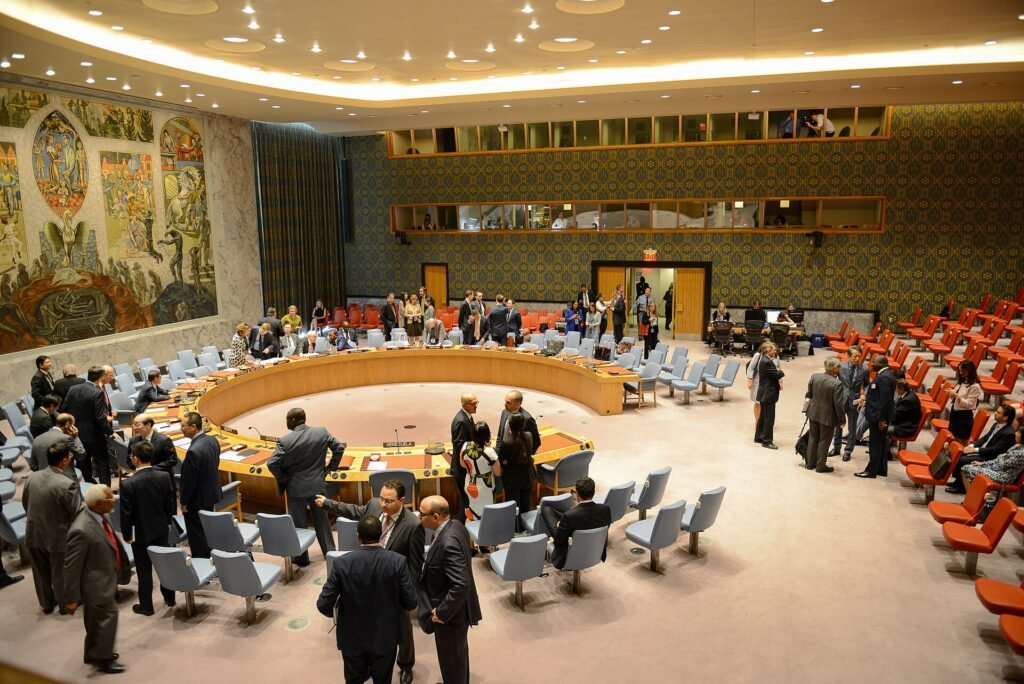
The UN Charter, signed in 1945, gives the Council the main responsibility for keeping international peace and security. It first met on 17 January 1946 in London and now meets at UN headquarters in New York. The General Assembly, where all 193 countries vote, mostly makes recommendations. The Council can make decisions that countries are obliged to obey.
In practice, it does four things: it discusses crises, calls on the parties to stop fighting, imposes measures such as sanctions and arms embargoes, and creates or renews peacekeeping missions. In rare cases it authorizes the use of force.
Who sits on the Council in 2026
The Council had 11 members in 1945 and grew to 15 in 1965. The five permanent members, often called the P5, are China, France, Russia, the United Kingdom and the United States, the main winning powers of the Second World War.
The other ten seats are elected by the General Assembly, five each year, for two-year terms. A candidate needs a two-thirds majority of the countries voting, which is 128 votes if all 193 take part, and cannot serve two terms in a row. Seats are shared by region: three for Africa, two for Asia and the Pacific, two for Latin America and the Caribbean, one for Eastern Europe and two for Western Europe and other states.
| Seat type | Countries | Term ends |
|---|---|---|
| Permanent | China, France, Russia, United Kingdom, United States | No end date |
| Elected | Denmark, Greece, Pakistan, Panama, Somalia | End of 2026 |
| Elected | Bahrain, Colombia, DR Congo, Latvia, Liberia | End of 2027 |
On 3 June 2026 the General Assembly elected Austria, Kyrgyzstan, Portugal, Trinidad and Tobago and Zimbabwe for 2027 and 2028. Germany, which campaigned hard, did not win a seat, a reminder that these elections can be competitive.
The Council presidency rotates every month in English alphabetical order. The president chairs meetings and shapes the agenda but has no extra vote.
How a vote works
Every member has one vote. What counts as success depends on the type of question, as set out in Article 27 of the Charter.
| Type of decision | What it needs | Can it be vetoed? |
|---|---|---|
| Procedural (agenda, inviting speakers) | 9 votes in favor | No |
| Everything else (sanctions, peacekeeping, demands) | 9 votes in favor and no “no” vote from a permanent member | Yes |
One detail surprises many people: if a permanent member abstains, that is not a veto. Since the Council’s early years an abstention has allowed a resolution to pass, which lets a permanent member show it is unhappy without blocking action.
From draft to decision
- One member, known as the “penholder”, writes a draft. On many long-running issues the same country writes the drafts every year.
- Members negotiate privately, often for days or weeks, to find wording everyone can accept.
- When the text is final it is put “in blue”, meaning it is ready for a vote, usually within a day.
- The Council votes in a public meeting and members explain their votes.
Most of the real work happens before the vote. Many resolutions pass unanimously because disagreements were settled in negotiation. The dramatic public vetoes are the cases where compromise failed.
The veto in numbers
According to research by Security Council Report, an independent group that tracks the Council, the veto was used 320 times on 264 draft resolutions and amendments between 1946 and the end of 2025.
| Permanent member | Vetoes, 1946 to 2025 |
|---|---|
| Soviet Union / Russia | 155 |
| United States | 94 |
| United Kingdom | 30 |
| China (including the Republic of China until 1971) | 21 |
| France | 18 |
The pattern has shifted over time. In the first two decades the Soviet Union vetoed most often, frequently to block new countries from joining the UN. From 1970 the United States used it more, most often on resolutions about Israel and the Palestinians. The United Kingdom and France have not cast a veto since 23 December 1989.
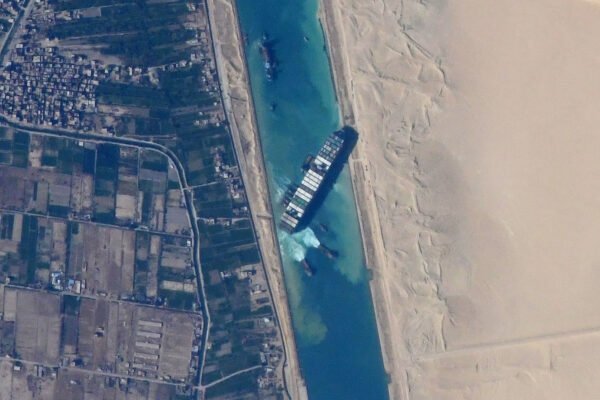
Veto use has risen again. In 2024 eight vetoes were cast on seven drafts, the most since 1986. In 2025 there were four: two by the United States on Gaza and two by Russia on Ukraine. In 2026 China and Russia have jointly vetoed two drafts so far: a Gulf states’ text on protecting shipping in the Strait of Hormuz on 7 April (11 votes for, 2 against, 2 abstentions), and a US text to extend the panel monitoring UN sanctions on Iran on 17 September. The Hormuz vote is part of a wider crisis explained in our guide to the world’s shipping chokepoints.
The Quiet Importance of the World’s Shipping Chokepoints
Why the veto exists
The UN’s founders had watched the League of Nations fail in the 1930s, partly because major powers left or ignored it. They concluded that an organization which acted against a great power would simply fall apart. The veto was the price of keeping those powers inside.
The veto was designed to keep the great powers at the table. Whether it still does is the central question in every debate about reform.
Critics say it lets one country shield itself or its allies even in cases of mass suffering. Supporters reply that without it the strongest countries might ignore the UN altogether.
What the Council can actually do
Peaceful settlement (Chapter VI)
The Council can investigate disputes, urge talks and recommend terms of settlement. These recommendations carry political weight but are generally not enforceable.
Enforcement (Chapter VII)
If it finds a threat to peace, a breach of peace or an act of aggression, the Council can order binding measures. Article 41 covers sanctions, arms embargoes and cutting diplomatic ties; Article 42 allows military action. The UN has no army, so any force comes from member states.
Peacekeeping
Missions are created and renewed by resolution, usually for a year at a time. The UN currently runs 11 peacekeeping operations, including in South Sudan, Lebanon, the Central African Republic, the Democratic Republic of the Congo and Cyprus. Their budget for July 2026 to June 2027 was set at about $5.1 billion, roughly 10 percent less than the year before, as the UN deals with a serious cash shortage.
What happens when the Council is blocked
- The veto initiative: since April 2022, under General Assembly resolution 76/262, the Assembly meets within 10 working days of any veto so every member can debate it.
- “Uniting for Peace”: a 1950 resolution lets the Assembly hold an emergency session and recommend action when a veto blocks the Council. Its recommendations are not binding, but they show where most of the world stands.
Why reform is so hard
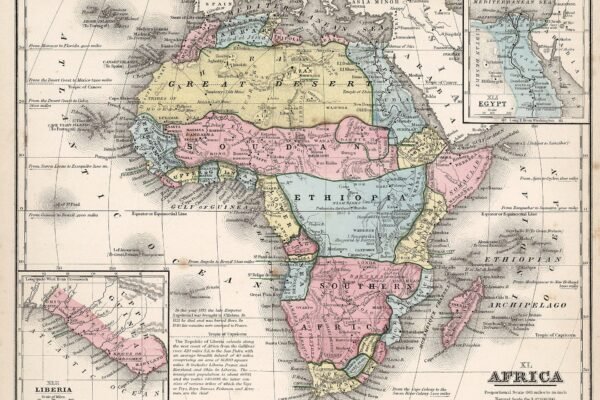
Most countries agree the Council reflects 1945, not today. Africa has no permanent seat, and India, Brazil, Germany and Japan have long sought one. Ideas include new permanent or long-term seats, more elected seats and limits on the veto in cases of mass atrocities. Old decisions about territory, explained in our piece on why colonial-era borders still matter, show how long such settlements can last.
The obstacle is the rulebook. Under Article 108, any change needs two-thirds of UN members, including all five permanent members, to ratify it. Any one of them can block reform of its own privileges. Formal talks have run in the General Assembly since 2009 without agreement.
Frequently asked questions
Are Security Council resolutions legally binding?
Decisions under Chapter VII are binding on all UN members under Article 25. Recommendations under Chapter VI carry political weight but are not enforceable in the same way.
Can a permanent member lose its seat?
No. The five are named in Article 23 of the Charter. Removing one would require amending the Charter, which that country could veto.
Does abstaining count as a veto?
No. Only a vote against by a permanent member blocks a resolution.
The bottom line
The Council is powerful when the permanent five agree, and most of the time they do: resolutions on peacekeeping, sanctions and aid access pass quietly. On conflicts where the big powers have direct interests, the veto often decides the outcome. For any headline about the Council, ask which permanent members care most, and what each would accept.
Sources
- United Nations Charter, full text (Articles 23, 25, 27, 39 to 42, 108)
- Security Council Report: research report on the veto, March 2026
- Security Council Report: In Hindsight: Living with the Veto, April 2026
- UN Meetings Coverage: China, Russia veto draft on the Strait of Hormuz, 7 April 2026
- Euronews: Russia and China veto Iran sanctions panel resolution, 18 September 2026
- General Assembly elects five non-permanent members for 2027 and 2028, 3 June 2026
- UN Peacekeeping: where we operate
- UN Meetings Coverage: $5.1 billion peacekeeping budget for 2026 to 2027