In this article
Exercise does not make you stronger while you are doing it. It breaks your muscles down a little and leaves them tired. You get stronger afterwards, while you rest, eat and sleep. Rest is not time off from training. It is part of training.
So how much rest is enough? The answer depends on what kind of exercise you do and how hard you push. Here is what the research and the latest guidelines say.
Key facts
- About 48 hours: a common gap before training the same muscles hard again.
- At least 2 days a week: how often the American College of Sports Medicine (ACSM) recommends strength training each major muscle group, in its 2026 guidelines.
- 2 to 3 minutes: rest between heavy sets led to more strength and muscle than 1 minute in a 2016 study.
- Daily is fine for gentle activity like walking, which needs little recovery.
What happens in your body after a workout
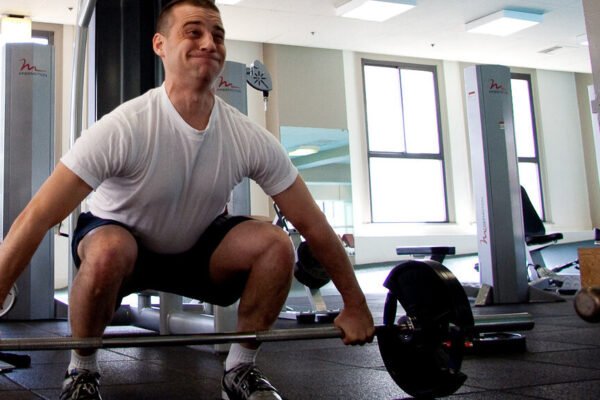
After a hard strength workout, your muscles repair and build new muscle protein. A classic 1995 study found that this building process was more than twice its normal rate 24 hours after heavy lifting, and was almost back to normal by 36 hours. That is one reason many coaches suggest about two days before working the same muscles hard again.
Soreness usually peaks one to three days after an unfamiliar or very hard workout. It is normal, and it fades as your body gets used to the training.
Rest days: a simple guide
| Type of exercise | How hard | Rest before repeating the same muscles |
|---|---|---|
| Walking, easy cycling, gentle yoga | Light | None needed; daily is fine |
| Steady jogging or swimming | Moderate | Often fine daily, with an easier day each week |
| Strength training | Moderate to hard | About 48 hours for the same muscle group |
| Intervals, sprints, very heavy lifting | Very hard | 48 to 72 hours |
You do not need full days off every time. You can train your legs on Monday and your upper body on Tuesday, because different muscles are resting.
What the 2026 guidelines say
In 2026 the ACSM published its first major update to its strength training guidelines in 17 years, based on 137 research reviews. It recommends training all major muscle groups at least twice a week. Its main message is that many approaches work, and that the best plan is the one you will stick to. The World Health Organization similarly recommends muscle-strengthening activity on two or more days a week for adults, alongside 150 to 300 minutes of moderate aerobic activity.
Rest between sets
Rest also matters within a workout. A 2016 study compared two groups of trained men doing the same programme for eight weeks. One group rested 1 minute between sets; the other rested 3 minutes. The 3-minute group gained more strength and more muscle size, mainly because they could lift more weight in each set.
- Heavy strength work: rest 2 to 3 minutes, or more.
- Moderate weights for muscle and tone: 1 to 2 minutes is usually enough.
- Light circuits for fitness: 30 to 60 seconds.
Signs you need more rest
- Your performance keeps dropping for a week or more.
- Muscles stay sore for more than three days.
- You sleep badly, feel irritable or lose interest in training.
- Your resting heart rate is higher than usual in the morning.
- You keep getting small injuries or colds.
Sleep is the most powerful recovery tool. Most adults need at least seven hours a night; our guide to what sleep does for the body and mind explains why.
Health note: This article is general information, not medical advice. If you have a health condition, are pregnant, or feel pain (not just tiredness) during or after exercise, talk to a doctor or a qualified trainer.
Frequently asked questions
Can I work out every day?
Yes, if you vary the type and intensity, for example strength training one day and a walk the next. Avoid training the same muscles hard on back-to-back days.
Is it bad to work out while sore?
Light activity usually helps soreness ease. If soreness is severe or does not improve after three days, rest those muscles longer.
Do older adults need more rest?
Often, yes. Recovery tends to take longer with age, so an extra day between hard sessions is sensible.
Food matters too: see our guide to reading nutrition labels, or browse the Fitness section.
Sources
- MacDougall et al., The time course for elevated muscle protein synthesis following heavy resistance exercise (1995)
- Schoenfeld et al., Longer interset rest periods enhance muscle strength and hypertrophy (2016)
- Newswise: ACSM’s 2026 resistance training guidelines
- World Health Organization: physical activity fact sheet